AREA15 did not have a name, a brand, or a category when we started. We built all three.
Overview
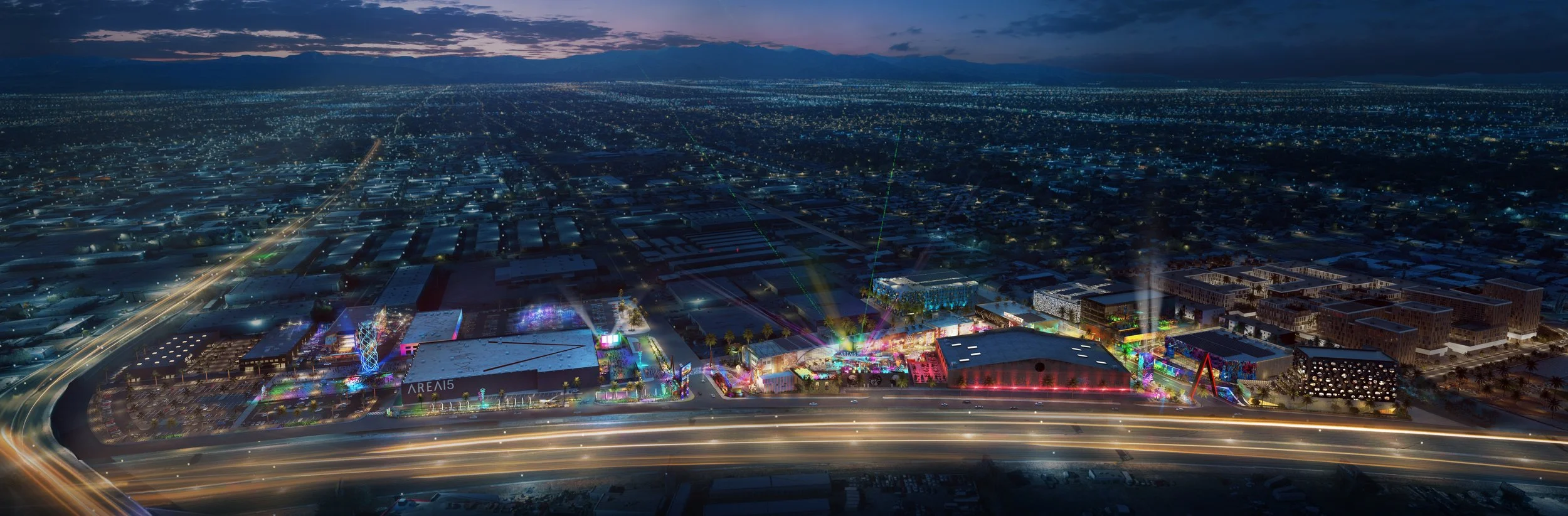
AREA15 is the world's first purpose-built experiential art and entertainment district, more than 250,000 square feet of designed space across a 30-plus acre site. I was the founding creative on the project, which means I was there for the part most people never see, when it had no name, no brand, and no category. We built all three.
The Challenge: a brand with no precedent
The brief was not to design a building. It was to invent a kind of place that did not exist yet, and then convince the world it had always been inevitable. AREA15 was not a mall, though on paper it resembled one. It was not a museum, an arcade, or a nightclub, though it borrowed freely from all three. Before we could pour a foundation, we had to answer the harder question. What is this, and why would anyone care?
The Brand: naming the unnameable
Everything started with the idea, not the architecture. We built the brand from the ground up, the name, the positioning, the visual identity, and the voice that would let an undefined place feel intentional rather than chaotic. The name itself had to do real work. Short enough to live on a marquee, strange enough to make people ask what it meant. That deliberate ambiguity became the brand's central asset. We were not telling people what to think. We were handing them a question they would want to answer in person.
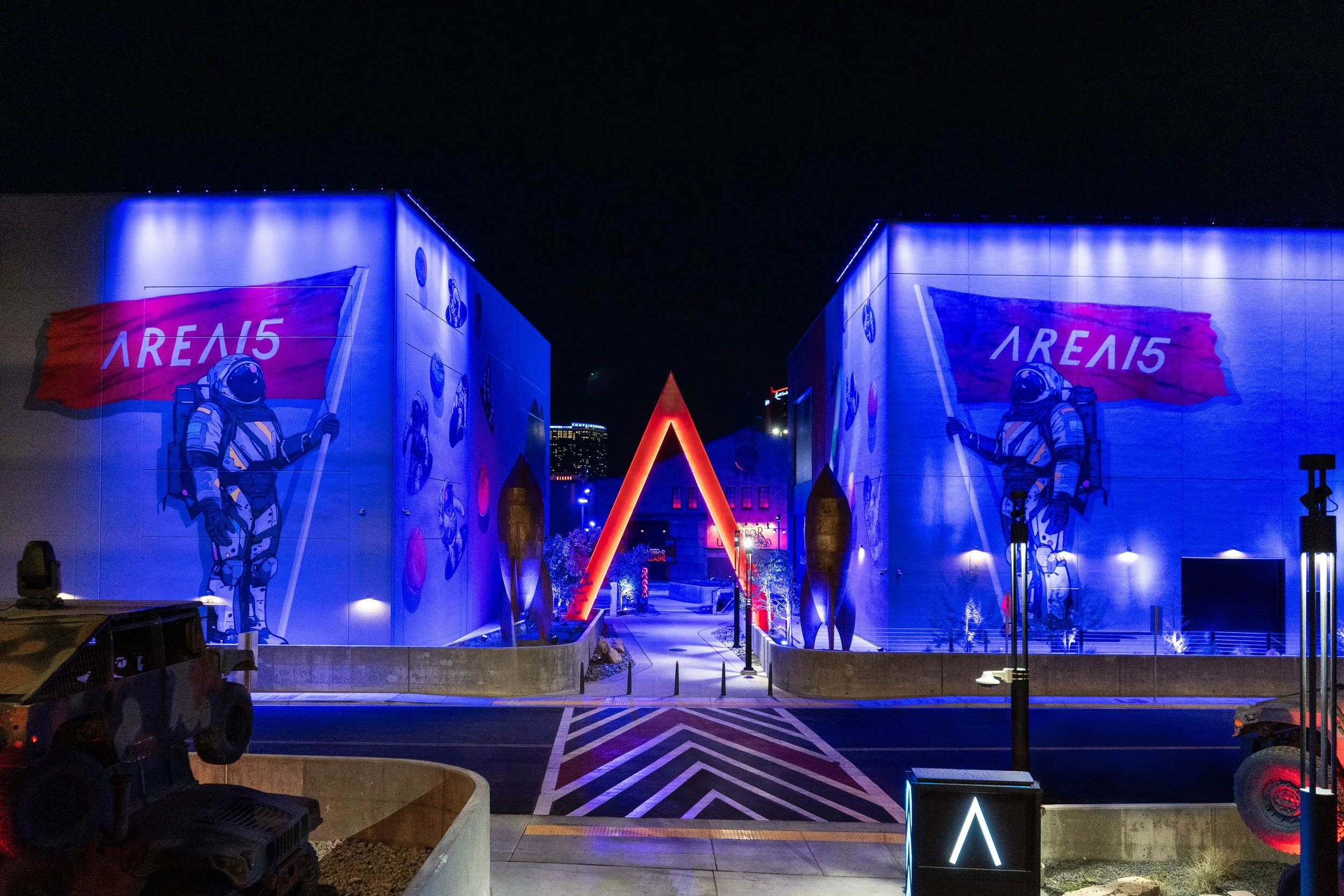
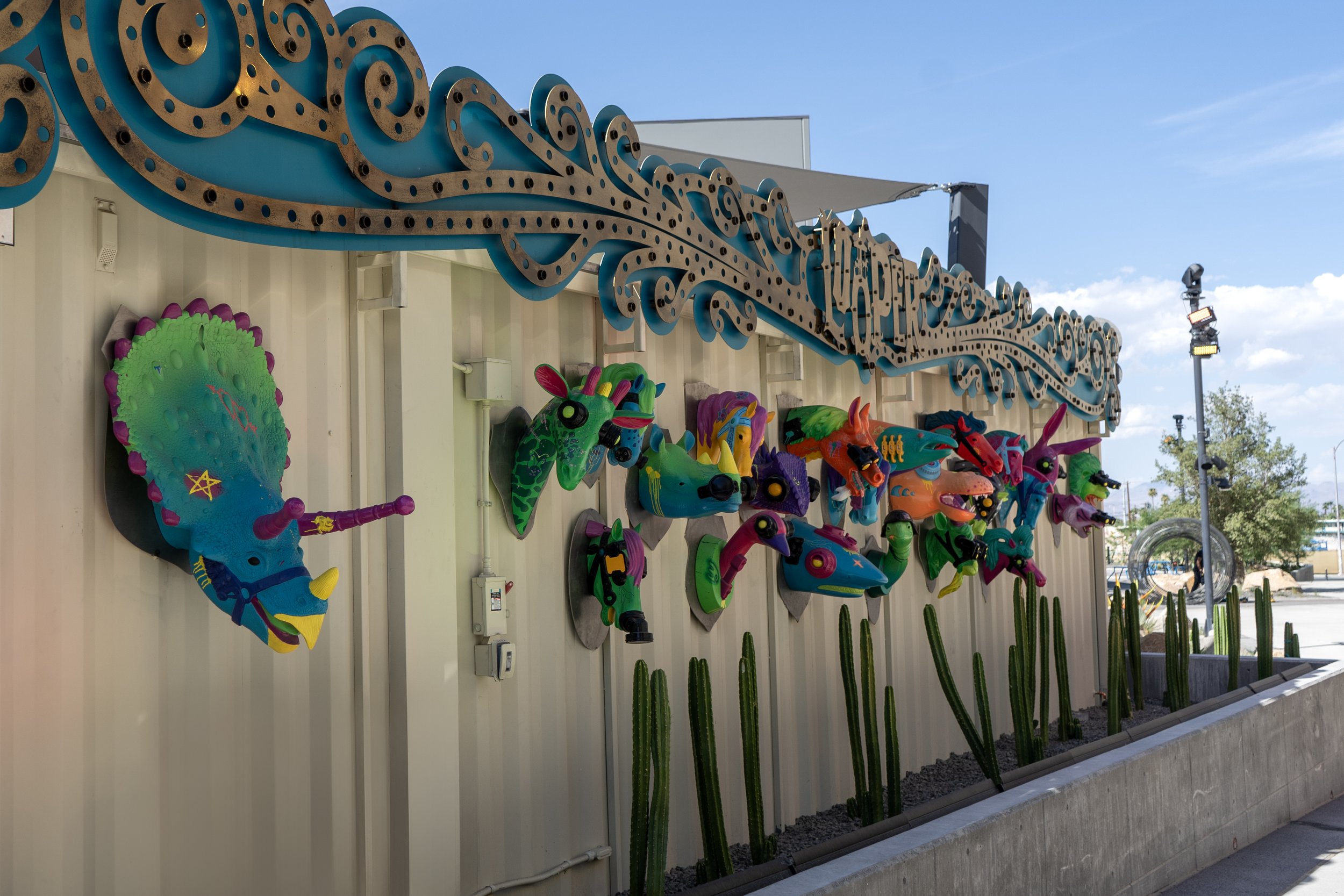
The identity system extended that logic. The branding had to read as a portal rather than a logo, a signal that the ordinary rules of retail and entertainment were suspended the moment you arrived. Every environmental graphic, wayfinding decision, and tonal choice pointed at the same promise. You are somewhere that exists nowhere else.
The Experience: building the feeling into the space
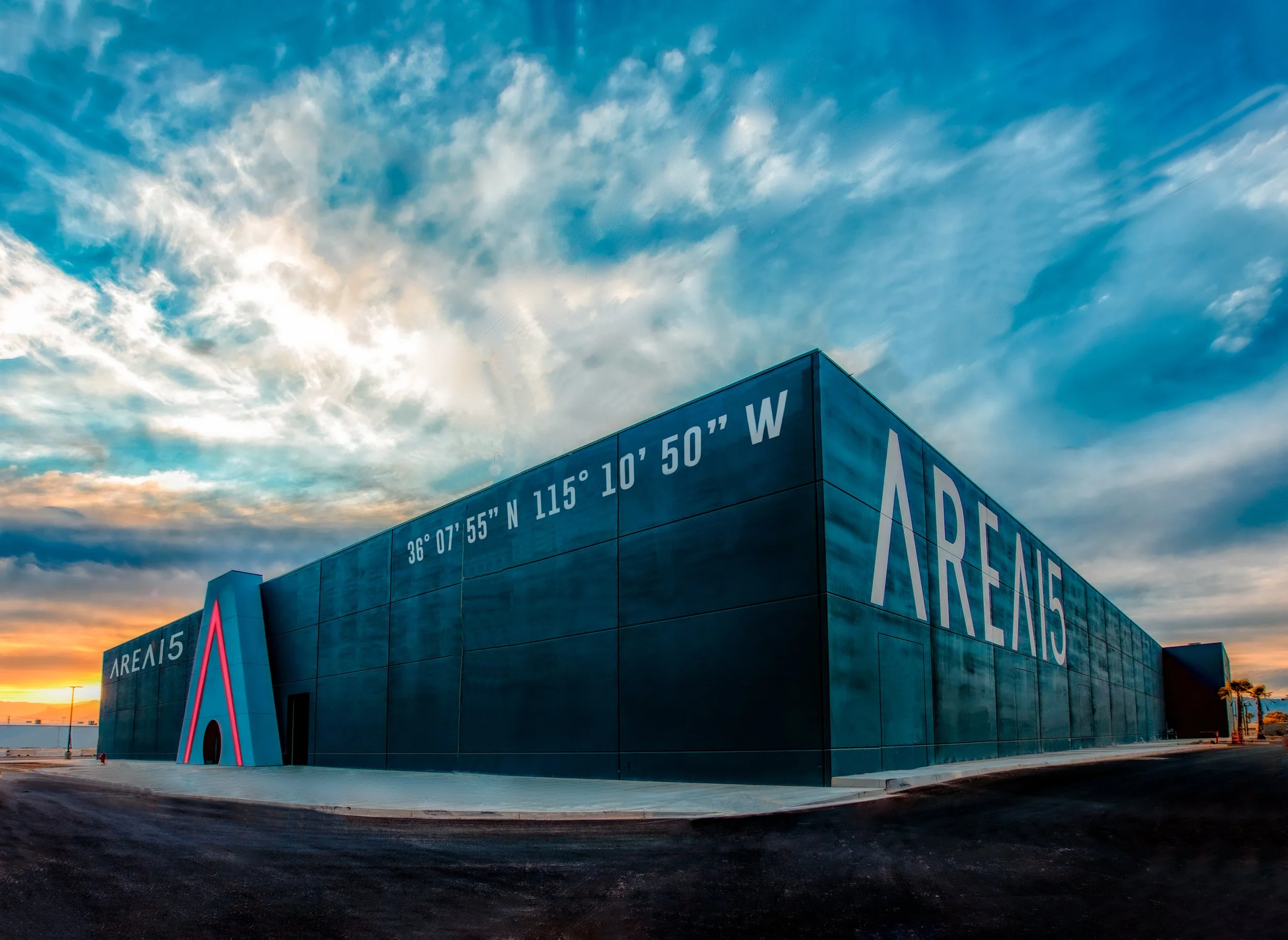
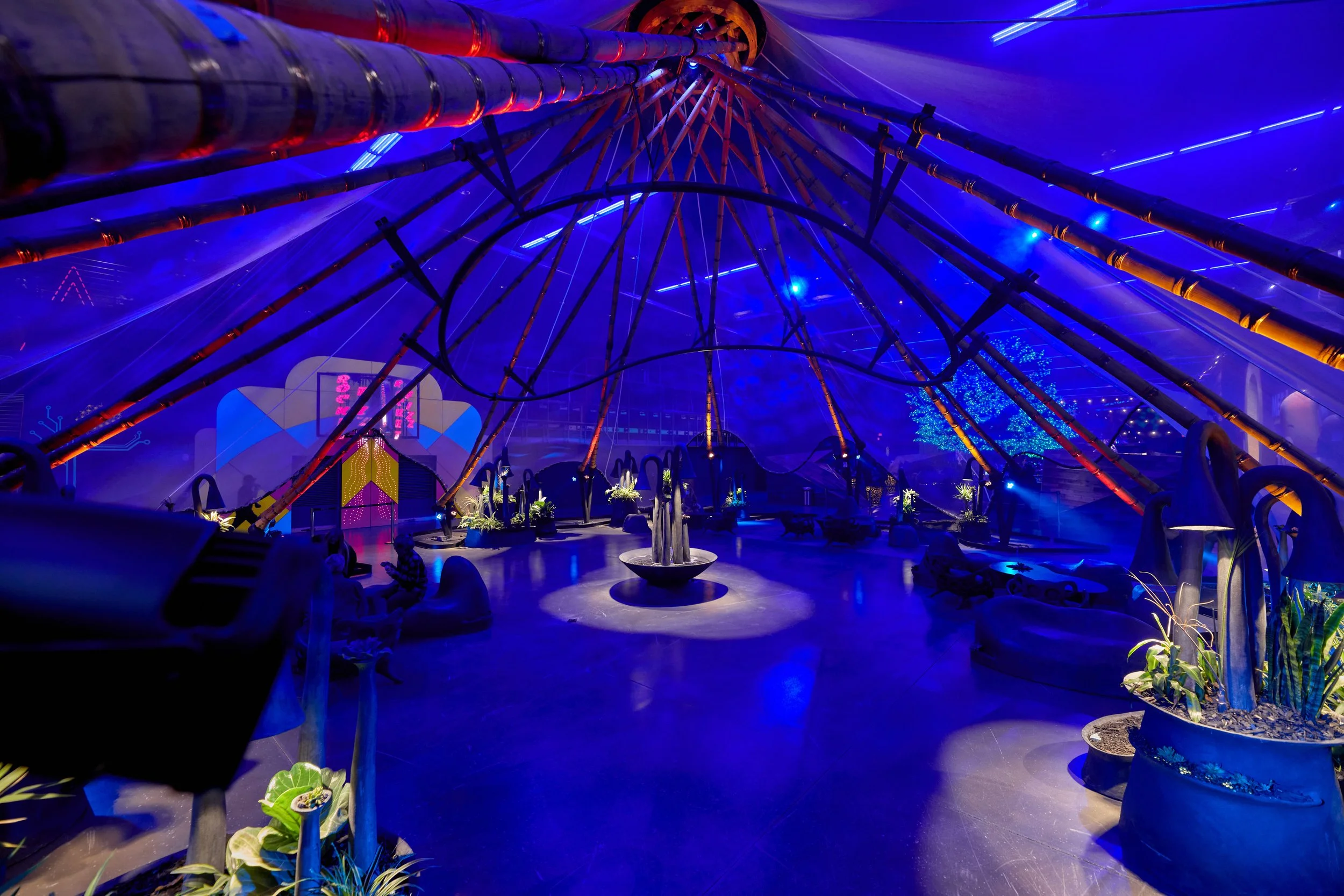
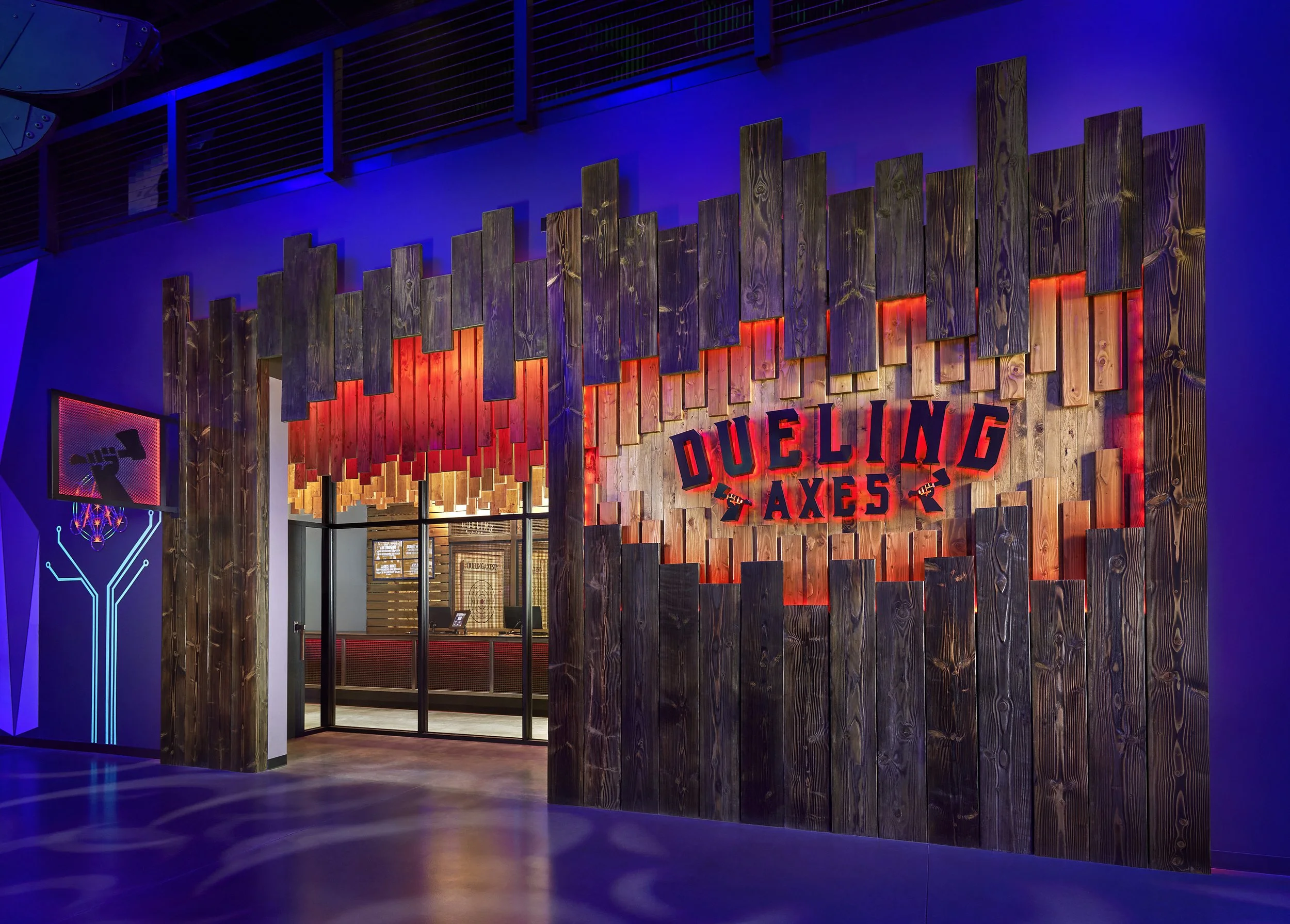
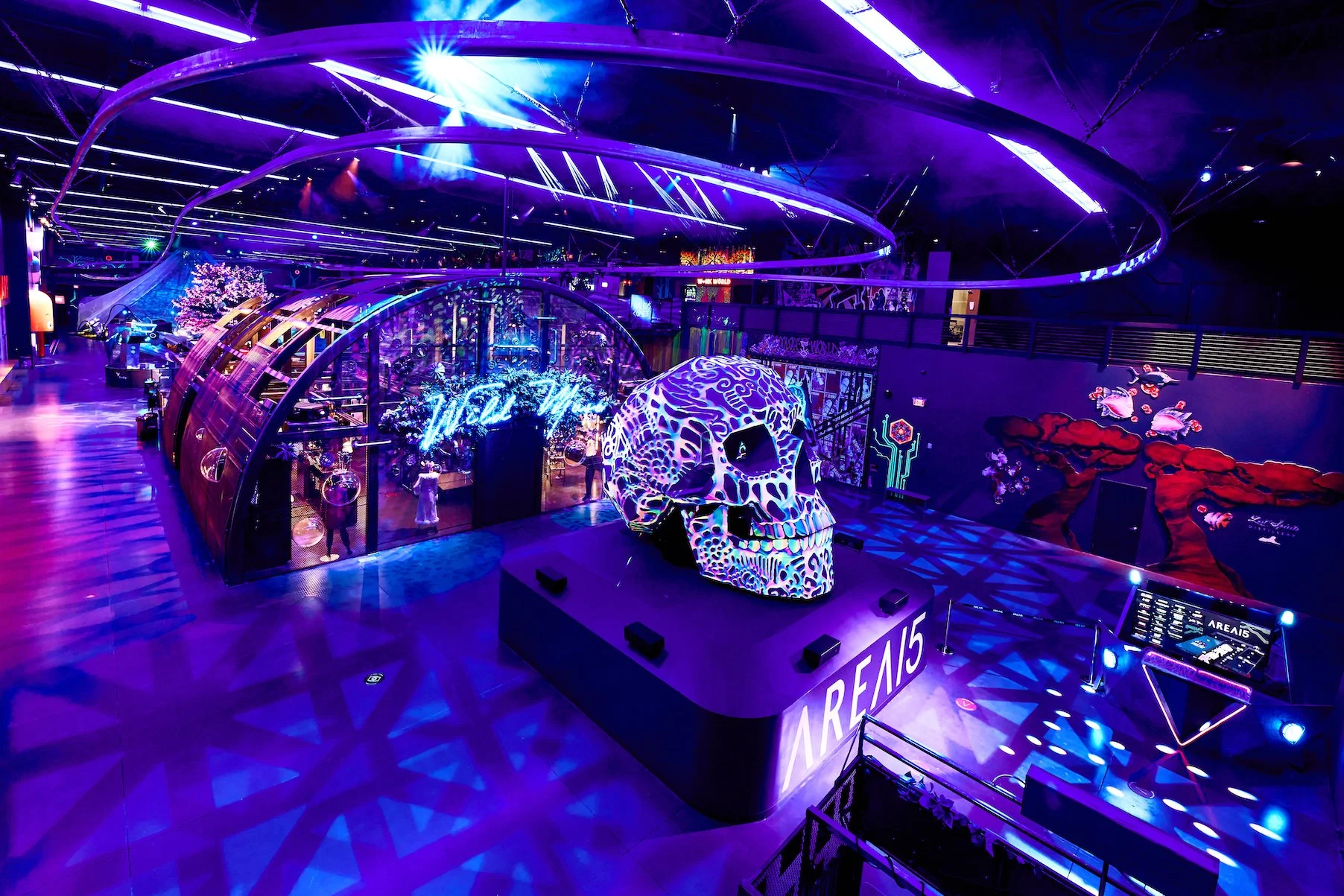
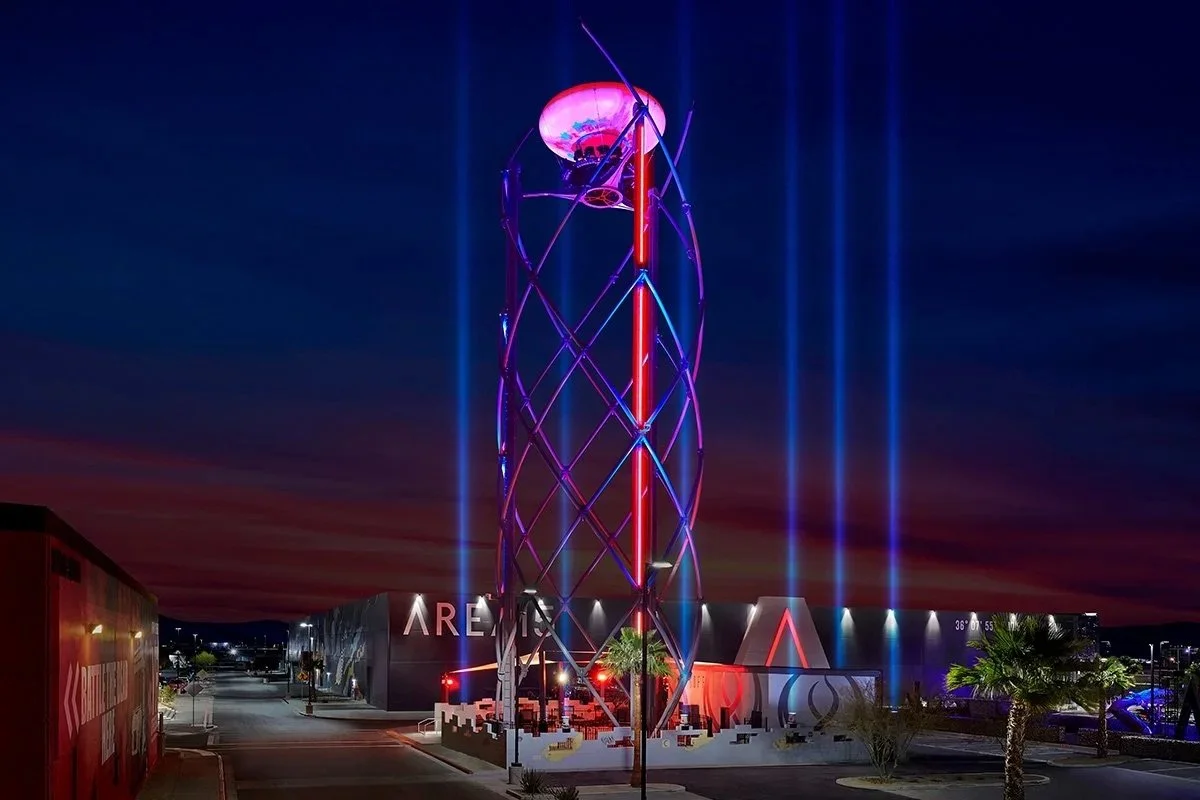
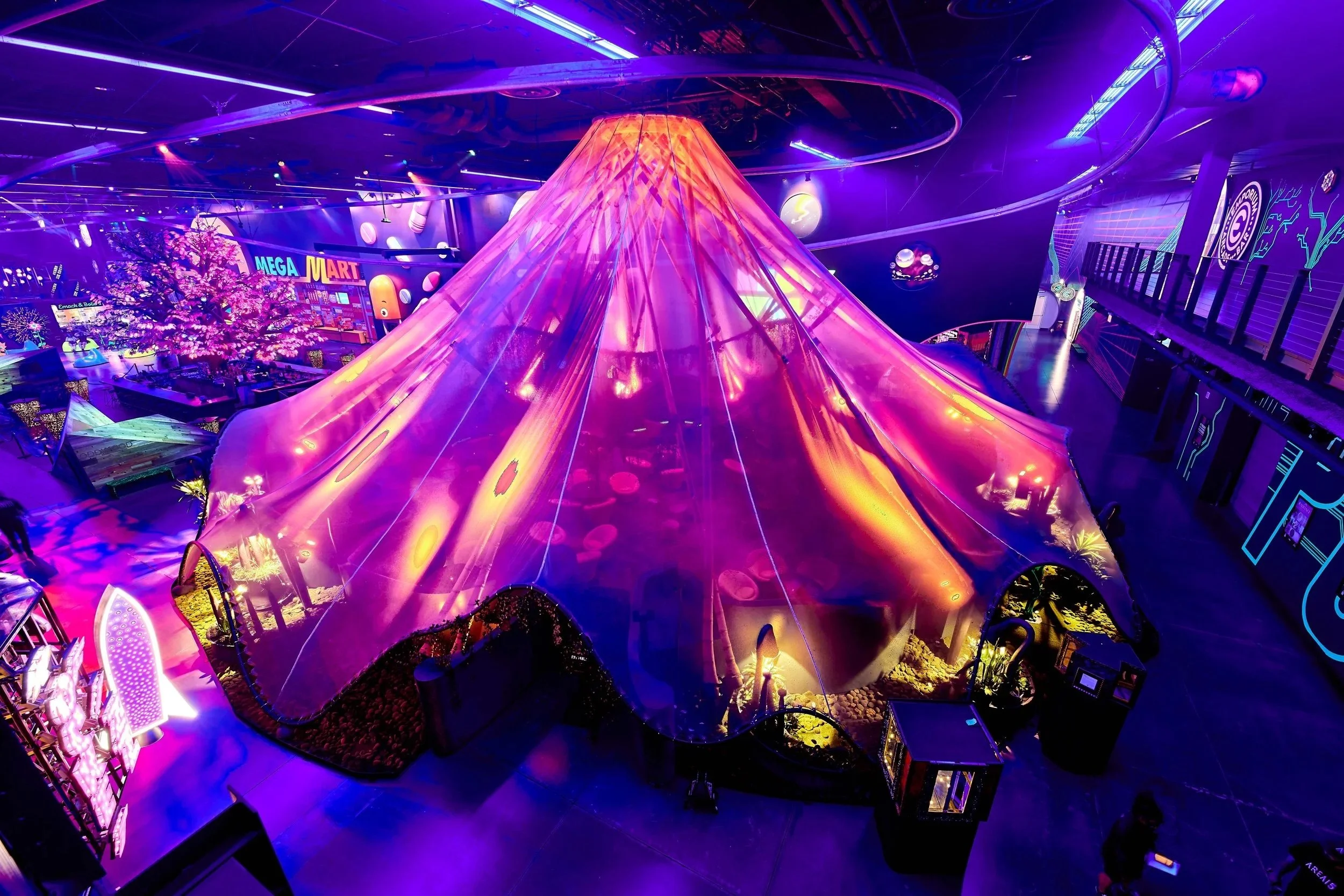
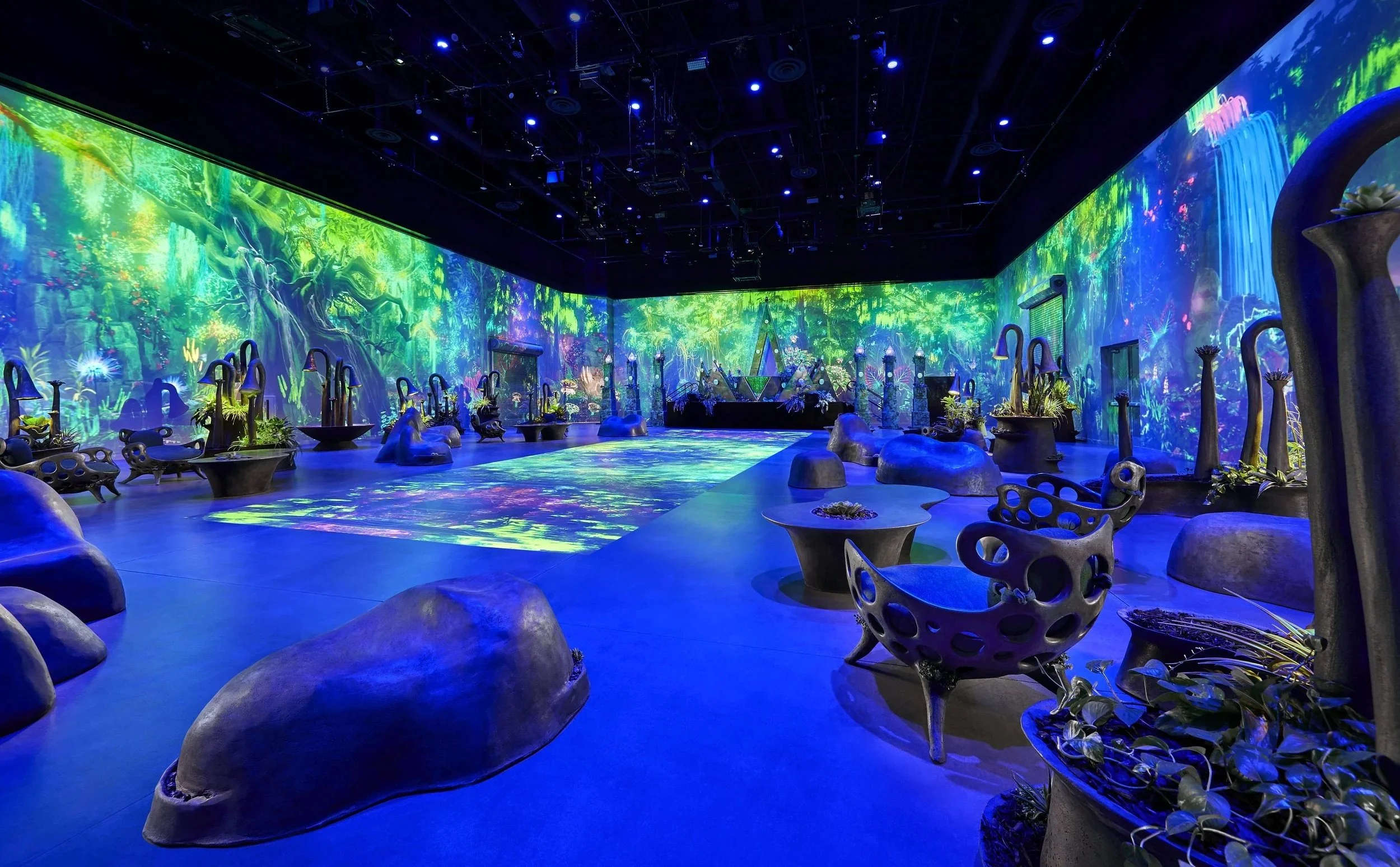
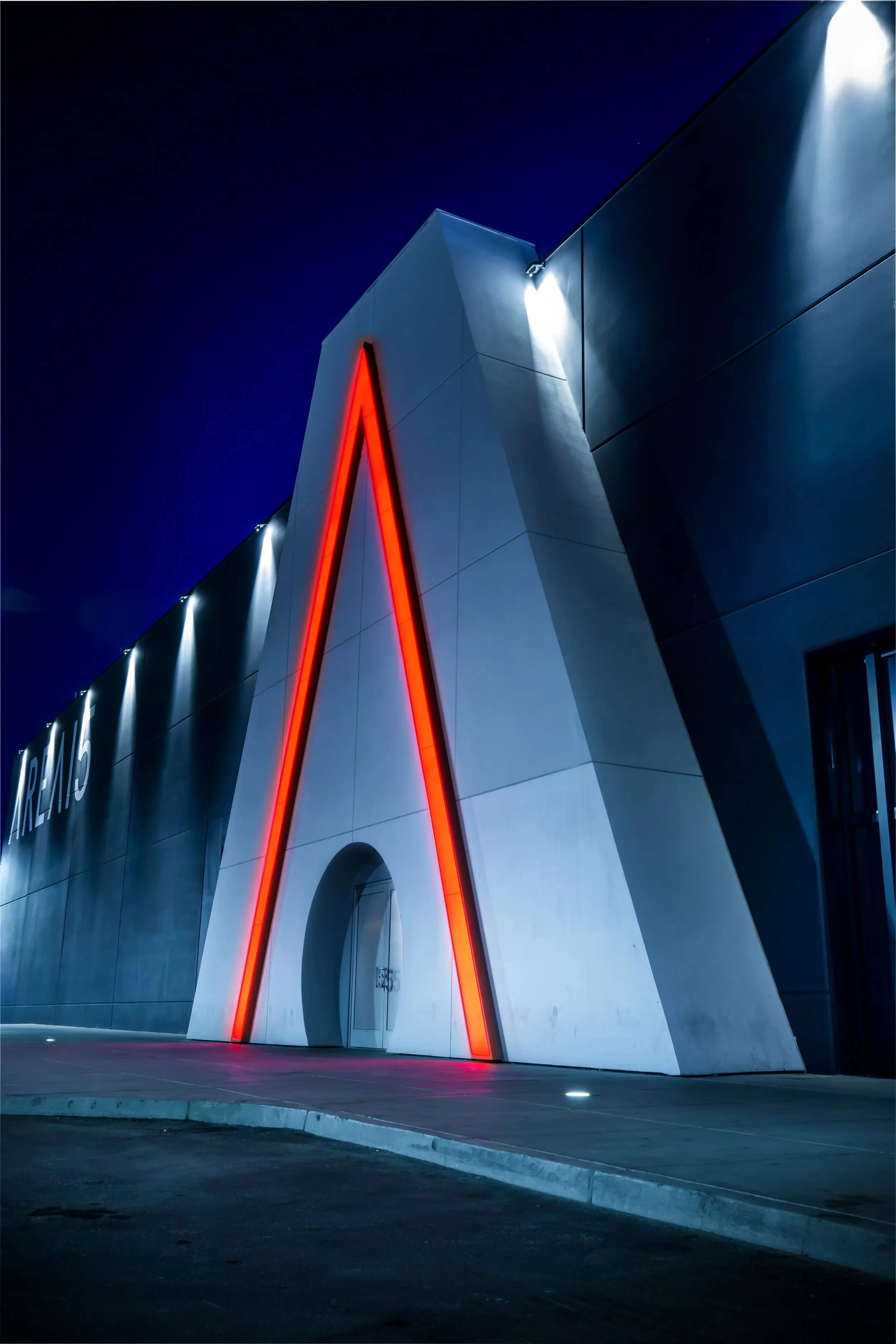
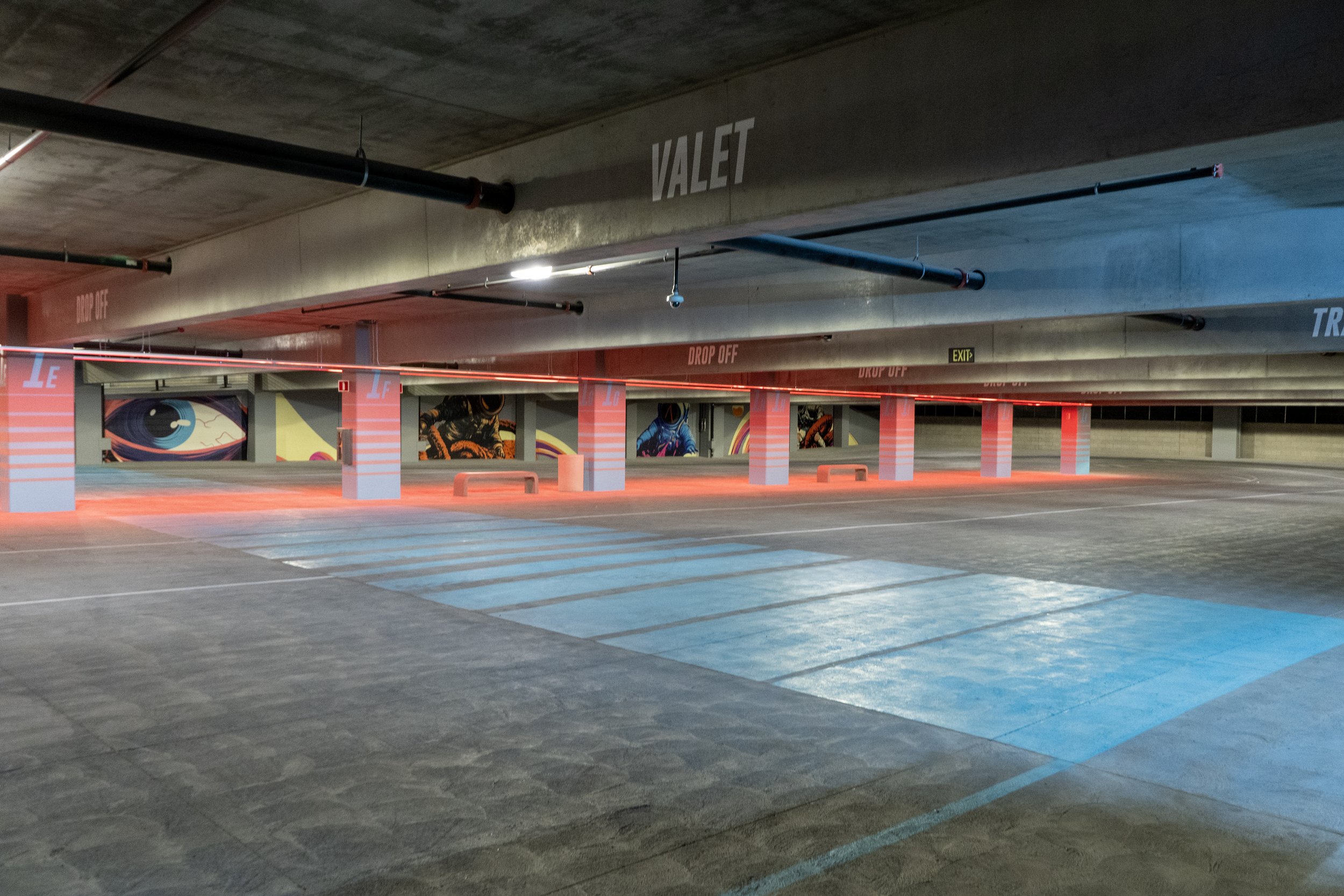
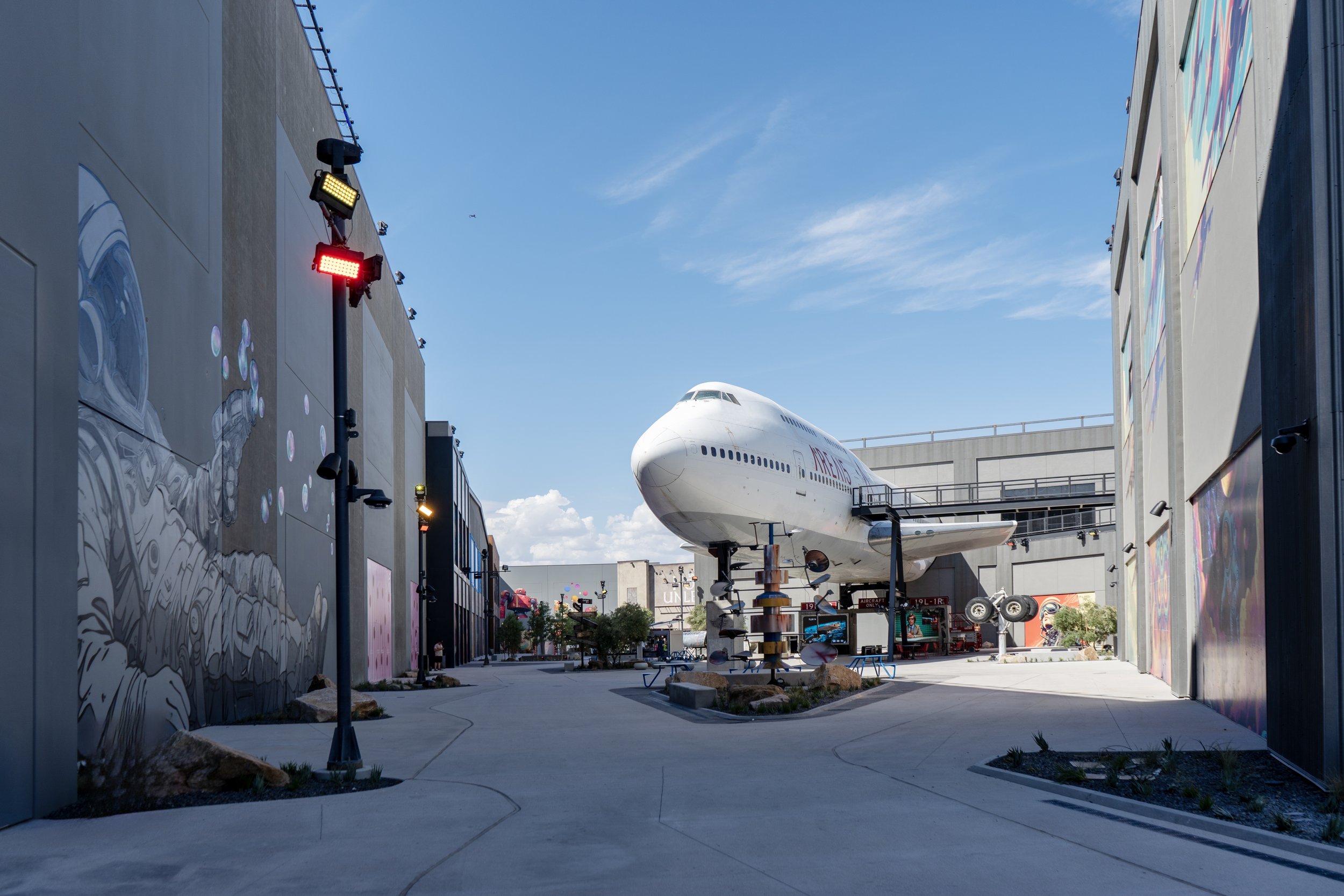
A brand this conceptual only survives if the physical experience delivers on it. The transition was everything. We were working against the flat, relentless light of the Nevada desert, so we designed an arrival that was both psychological and physiological. Cold steel, expansive concrete, and deep shadow set off the neon-soaked interior, so that the instant a guest crossed the threshold, their senses understood that the old rules no longer applied.
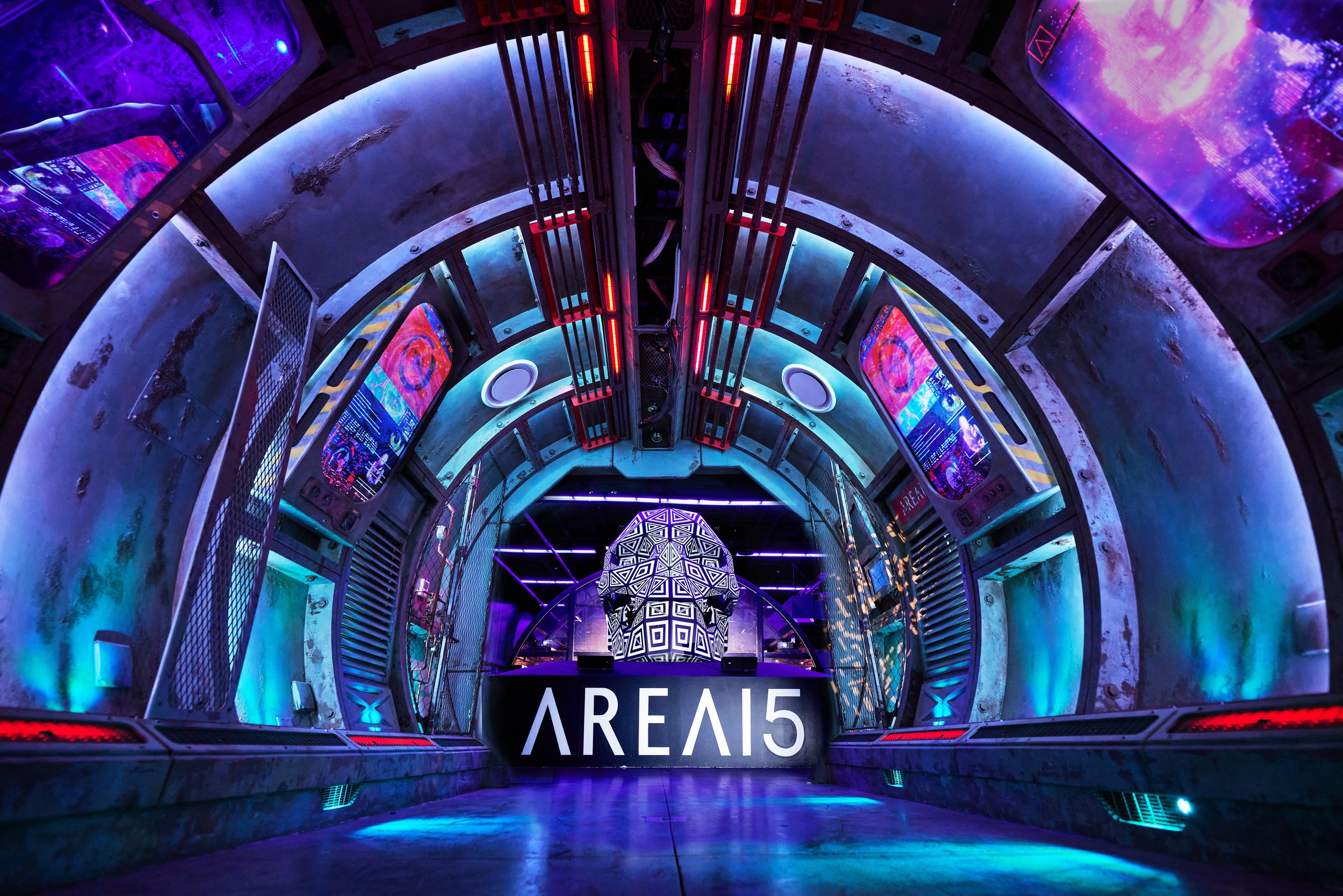
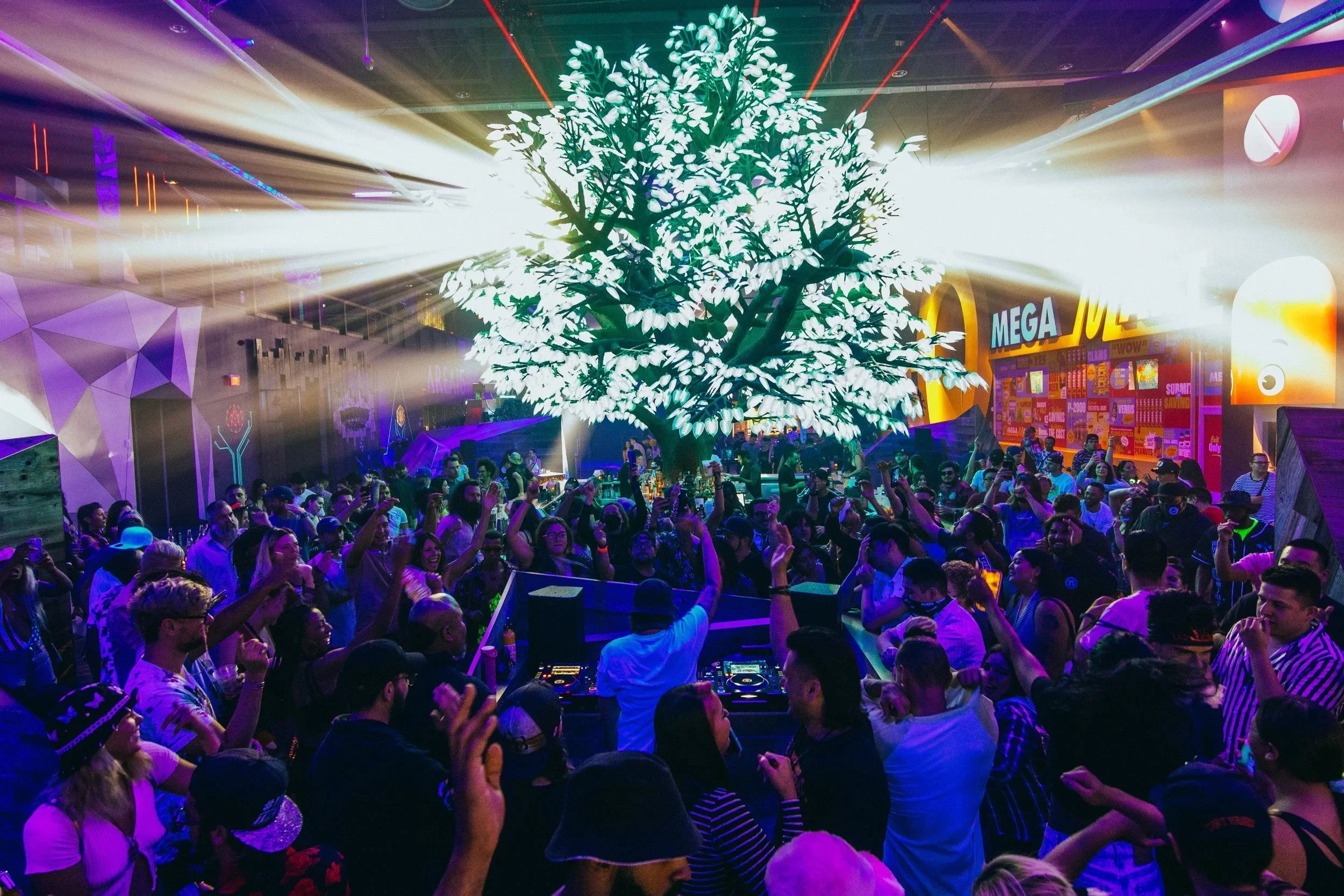
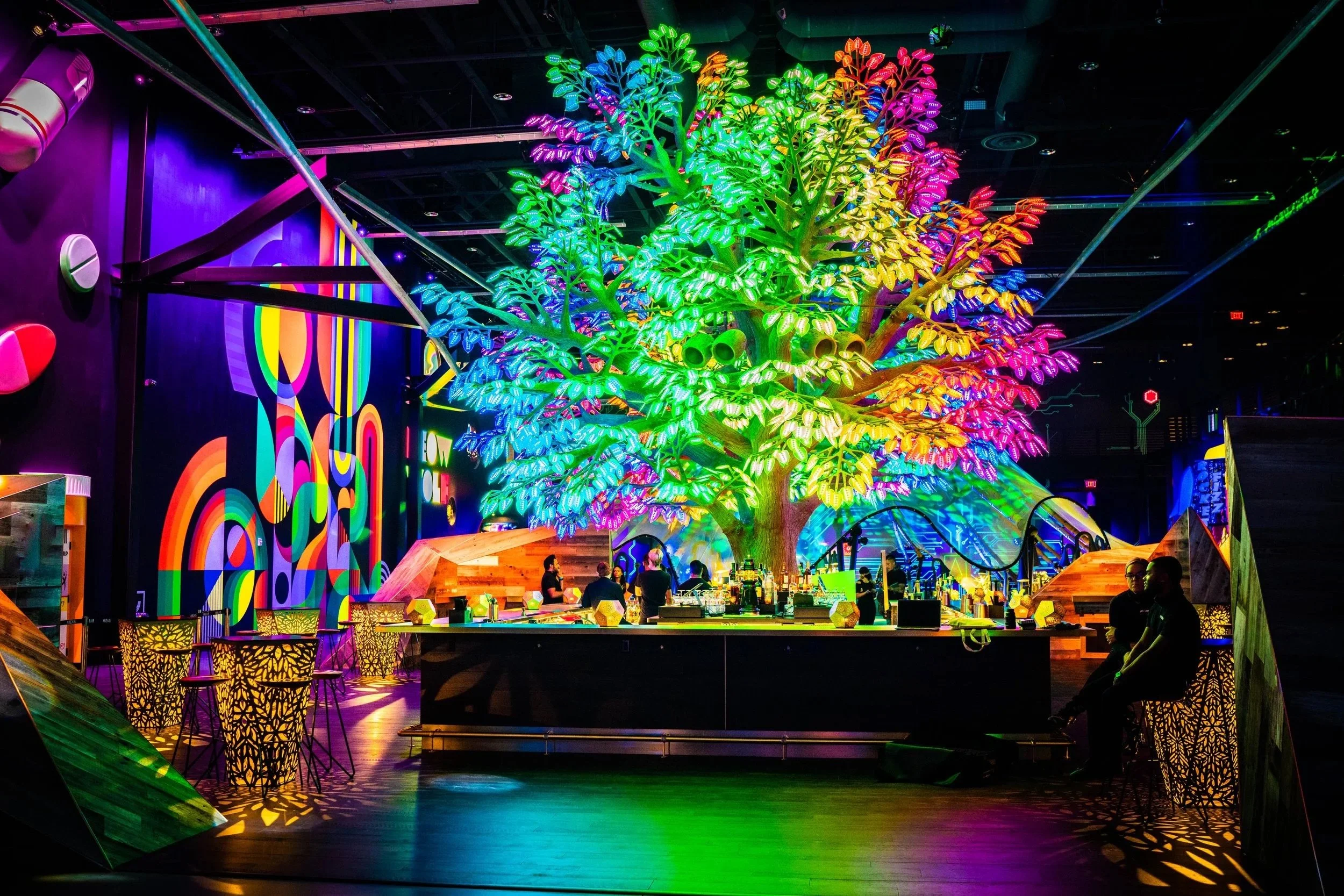
At the center runs the Spine, a 300-foot corridor that feels like a science-fiction dream but moves crowds with the efficiency of a transit hub. We treated it as the brand's main stage, a space designed to be photographed, returned to, and never fully exhausted. Anchors like the 23-foot illuminated tree at Oddwood gave the district landmarks that were unmistakably its own.
The Outcome
AREA15 opened as a category of one and became a blueprint the industry is still trying to reverse engineer. It proved that a brand built on a deliberate, well-managed question can become a destination, and that the most enduring experiences are confident enough to leave the audience something to finish themselves.
Role: Founding Creative Director
Scope: Brand creation, naming, visual identity, interior design, environmental branding, experiential design, multi-vendor creative direction
📍 Las Vegas, NV
📍Riyadh, Saudi Arabia
📍Orlando, FL (concept)