
The Last Human Job is Taste
Maxwell Perkins, an editor at Scribner's, once received a manuscript of more than a thousand pages from an unknown writer. The year was 1929. It was shapeless, overgrown, and impossible to publish as it stood. Perkins spent months with Thomas Wolfe cutting and restructuring it into Look Homeward, Angel, the novel that made Wolfe's name. Perkins also discovered Fitzgerald and Hemingway, and he insisted to the end that an editor creates nothing and only releases the energy already in the work. He was wrong about the nothing. What he did was the rarest creative act there is. He knew what to keep.
I have been thinking about Perkins as generative tools collapse the cost of making things to almost zero. For most of history, the bottleneck in creative work was production. Making the thing was slow and expensive, so the people who could make things held the value. That era is ending. A model can now generate a thousand logos, a hundred drafts, or a whole campaign before lunch. When making becomes infinite and free, the bottleneck moves. It moves to judgment.
From Making to Choosing
The scarce act is no longer generation. It is selection. When everything is possible and most of it is mediocre, the valuable person is the one who can look at a thousand options and know which one is alive. That is not a mechanical skill. It is taste, and taste is stubbornly human.
The radio producer Ira Glass once described the engine of a creative life as a gap, the distance between your taste and your ability. For beginners, taste runs ahead of skill, and the disappointment of that gap is what makes people either quit or improve. Generative tools have quietly inverted the problem. They hand everyone enormous ability overnight. What they cannot hand anyone is the taste to use it well. The gap has not closed. It has only moved to the one place a machine cannot follow.
Taste Is Earned, Not Issued
Here is the part the technology cannot shortcut. Taste is not a setting. It is the compound interest of experience, the residue of thousands of small judgments made and lived with over years. You learn what is good by making things that were not, by sitting with the disappointment, by watching an idea you loved fail in front of an audience and an idea you doubted quietly work. Every one of those moments deposits something. Eventually the deposits become an instinct you can no longer fully explain, only trust.
That is why taste arrives late and unevenly, and why it cannot be downloaded. A model has seen everything and lived nothing. It can reproduce the surface of good work because it has ingested an ocean of it, but it has never made a bad decision and felt the cost, never defended a choice in a room, never carried a project long enough to learn what it was really about. Experience is not just exposure. It is exposure plus consequence. The machine has the first and will never have the second.
This is also the quiet answer to the anxiety of the young creatives staring at the gap. The gap is not a flaw in you. It is the apprenticeship. The discomfort of knowing more than you can yet execute is the exact mechanism by which taste is built, and it is the one advantage no amount of compute can hand to someone who has not done the years.
Editing Is the Work Now
If production is solved, then editing becomes the job. Not editing as proofreading, but editing as the act of deciding what a thing is about, what belongs in it, and what has to go so the rest can breathe. Perkins did it with a pencil and a thousand pages. A creative leader does it now with a hundred machine-generated directions and the conviction to kill ninety-nine of them.
The obvious objection is that the models will simply learn taste too, that this is only a matter of more data and another generation of training. I do not think so, and the reason is structural. A model optimizes toward the center of everything it has seen. It is an averaging machine, and it is extraordinary at it. But taste is frequently the refusal of the average. It is the willingness to prefer one strange, specific, defensible thing over the thousand competent options, and to stand behind that preference when it would be easier to regress to the mean. That requires a point of view, and a point of view is not an output. It is a position someone is willing to defend.
This is also why design and language cannot be pulled apart. To edit well, you have to know what you are trying to say. The cut is a sentence and the layout is an argument, and both are expressions of the same conviction. The tools will keep getting better at producing options. They will not get better at wanting one of them more than the others.
The Comfort of the Curator
There is a quiet relief buried in all of this. For years the fear has been that the machines would take the creative work. What they are actually taking is the manufacturing of it, the part that was always the most tiring and the least human. What they leave behind is the part that was always the real job. Deciding what is worth making. Knowing what to keep. Standing behind a choice when the easy thing would be to generate ten more.
The future does not belong to the fastest producer of options. We will all have that easily accessible. It belongs to the person with the judgment to choose, the taste to recognize the one good thing, and the experience, hard-won and unrepeatable, to know the difference.
The Premium of Presence: Macroeconomics in the Age of Digital Abundance
In 1776, Adam Smith pointed at a contradiction that economists still teach today. Nothing is more useful than water, yet it will buy almost nothing. A diamond is nearly useless, yet it commands a fortune. The paradox of value turns on scarcity. What is abundant drifts toward cheap, and what is rare grows dear, almost regardless of how much we actually need it. Two and a half centuries later, that single observation explains the strangest shift in how people now spend their money.
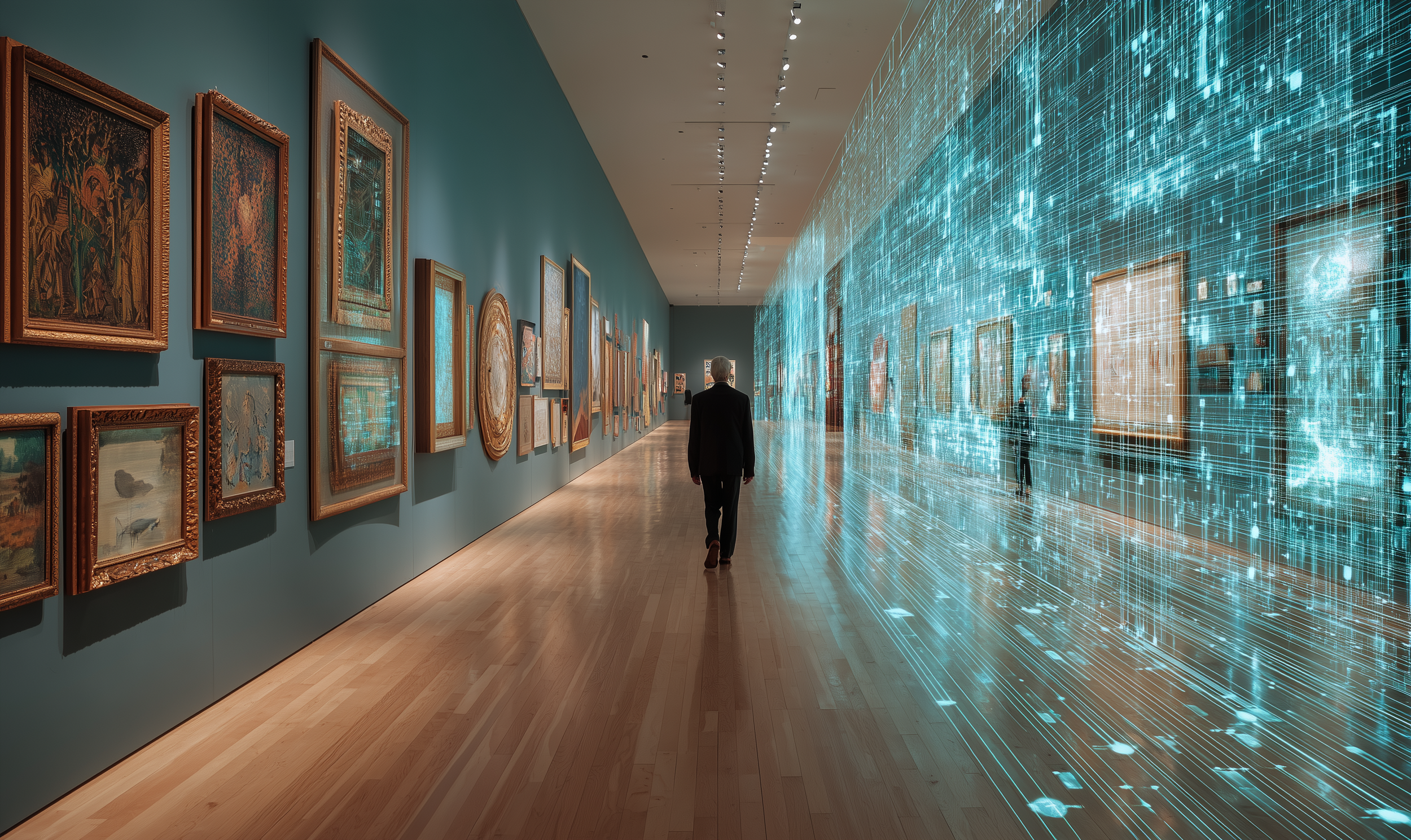
As digital experiences become infinitely scalable, universally accessible, and nearly free to produce, they lose their premium in exactly the way Smith would have predicted. In a market flooded with automated convenience, value moves to the one thing that cannot be scaled, physical presence.
The Mathematics of Scarcity
The data shows a structural shift in how people define value. Recent analysis from the Mastercard Economics Institute describes a "screen break," with consumers trading algorithmic engagement for physical reality. The global experience economy is projected to reach $2.1 trillion by 2032, and consumer spending on physical experiences has surged by roughly 65 percent against its pre-pandemic baseline. This is not a passive mood. It is an active reallocation of capital toward the real.
The Reset to Real
The hunger for physical grounding is highest among the people who are most digitally saturated. Data from the Eventbrite Cultural Intelligence Report describes a "Reset to Real," with nearly 74 percent of adults aged 18 to 35 saying in-person experiences matter more to them than digital ones, and many actively limiting screen time to find physical community. They will pay for it, too. Industry research finds that a large share of younger consumers will travel long distances and spend over $5,000 on tickets alone to attend a destination event. For this group, presence is not a luxury. It is a counterweight to a digital occupation.
Beyond the Funnel
This is why corporate investment is realigning so fast. When digital advertising hits diminishing returns through algorithmic fatigue, physical space becomes the strongest tool for genuine connection. Over 74 percent of Fortune 1000 marketers expect to increase experiential spending, and 86 percent of B2B marketers are increasing their event budgets. Event budgets are growing at roughly 10.9 percent a year while overall digital marketing spend declines around 3.1 percent. The returns tell the story. Live activations report average returns of 3:1 to 5:1, and up to 10:1 for the strongest immersive concepts. And the trust they build is the part a funnel cannot replicate. Roughly 85 percent of consumers report a higher propensity to purchase from a brand after a live event, and 77 percent say their trust in it rises after a physical interaction.
Technology as the Core Enabler
This reallocation has produced a surge in specialized infrastructure. The global immersive marketing market, valued near $9.03 billion, is projected to reach $89.45 billion by 2034, a compound annual growth rate of about 29 percent. Within that, the budget split is telling. Software is nearly 45 percent of the market, the core enabler of interactive, real-time environments. Hardware is roughly 30 percent, the physical foundation of projection mapping, spatial audio, and haptics. Experiential design and integration services make up the remaining 25 percent, ensuring the technology serves the narrative rather than overshadowing it. We are no longer building static sets. We are deploying reactive environments that blend physical intimacy with digital intelligence.
Designing the Premium Reality
This economy demands a higher level of execution. Because people are trading streaming subscriptions and passive consumption to fund these real-world outings, their expectations for the physical environment have skyrocketed. The bar for what feels worth it has never been higher. We can no longer rely on superficial aesthetics or basic photo ops. If an audience will travel thousands of miles to step inside a space, that space has to deliver on the promise of unrepeatable presence.
This is the real synergy of our tools. We use the automated backbone, the predictive flow models, the data layers, not to make the space feel more digital, but to make the physical encounter feel more profound. We automate the logic so we can elevate the magic. The ultimate premium of our time is the luxury of being somewhere real, somewhere sensory, and somewhere undeniable.
Sensory Debt: Designing for the Post-Screen Body
Sensory Debt
A New York physician named George Beard had a name for the exhaustion of modern life. He published it in 1881 and called it neurasthenia, and he traced it to the era's overwhelming new machines: steam power, the telegraph, and the daily press. The human nervous system, he argued, was being asked to process more stimulation than a body was built to carry. He was describing the 1880s. He could just as easily have been describing a Tuesday afternoon now.
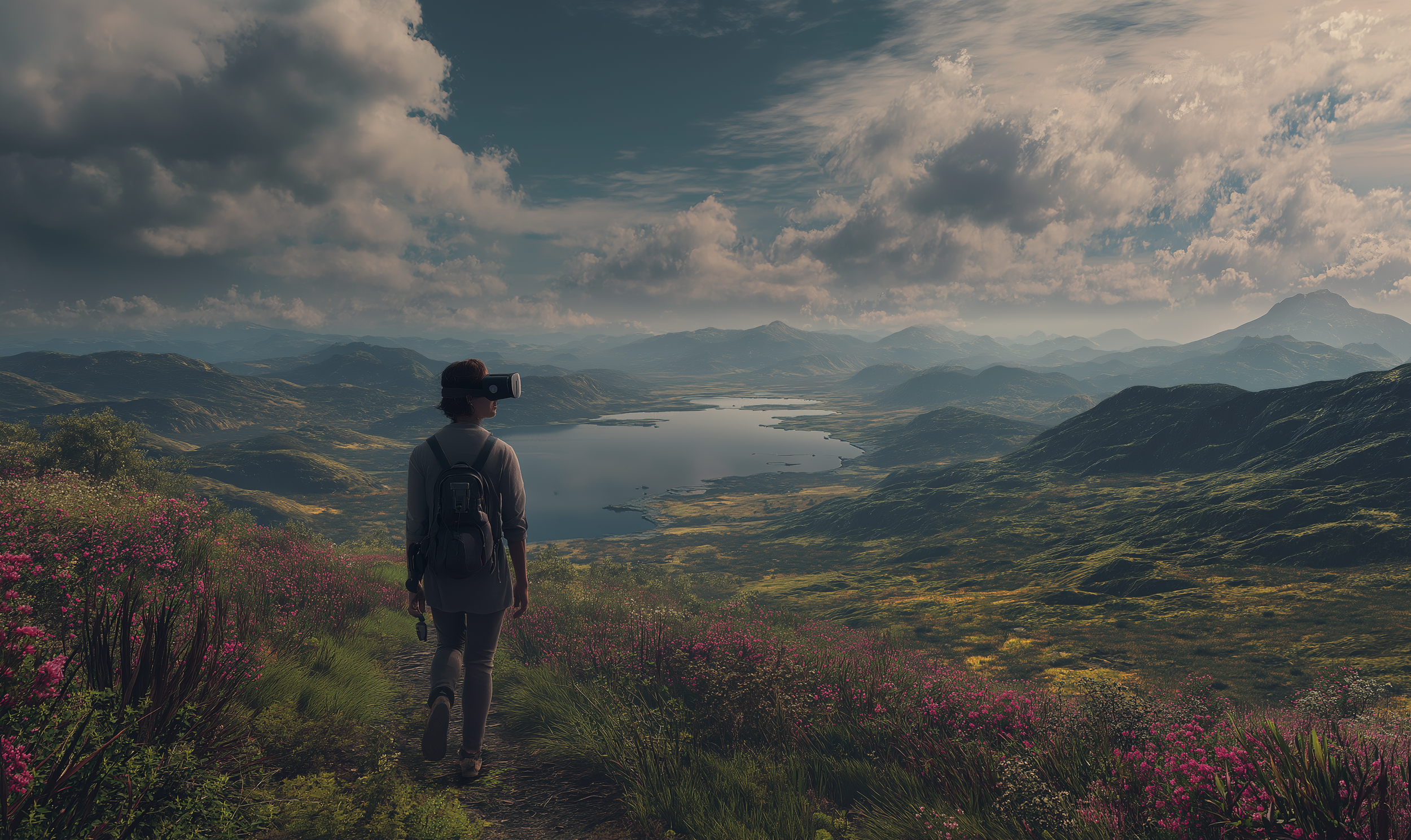
We have quietly accepted that the experiential director's job is no longer the arrangement of objects in a room. The line between the digital layer and the built environment has dissolved, and as large language models and agentic tools move into our daily creative stacks, a familiar imbalance has returned in a new form. Call it sensory debt. Our cognitive load is carried by high-speed automation while our physical bodies are left starved for real, tactile feedback. The question is no longer how to use AI. We are already doing that. The question is how to spend the efficiency it gives us to repay the biological debt our audiences carry from a life lived behind glass.
The Automation Vacuum
As agentic tools take over site analysis, logistics, and routing, the digital experience has become almost frictionless. That is a triumph of efficiency and a quiet problem for memory, because humans do not form lasting emotional anchors in a void of ease. When the functional parts of a journey, the ticketing, the wayfinding, the information, are handled by invisible systems, the physical space has to work harder to justify itself. We stop designing for utility and start designing for regulation.
Neuro-aesthetics and the Strategy of the Tactile
We are designing for a post-screen body that is visually overstimulated and starved for touch. The tools let us iterate on these ideas at unprecedented speed, but the final output has to remain stubbornly physical.
Intentional tactility. In a world of liquid glass and frictionless interfaces, the handmade and the imperfect have become high-status signals. A surface that feels pressed, carved, or weathered offers a tactile pause that builds immediate trust.
Acoustic regulation. We design for the inner ear as carefully as the eye. High-end immersive spaces now use specific acoustic frequencies to settle a guest's nervous system, part of a shift in the new codes of luxury where the premium is curated quiet rather than more noise.
The geometry of presence. With agentic tools we can map guest flow with uncomfortable accuracy. The expert move is to use that data to break the flow rather than only smooth it, building eddies in the stream where a person can catch up with their own senses.
AI as the Invisible Backbone
The integration of agentic AI and autonomous workflows is not about replacing the creative eye. It is about extending it. We let these systems run the logistics and the logic of a space, the lighting rig, the real-time soundscape, while the human director stays focused on the honest impact of a physical encounter. The system can carry the cognition. Only the body can register the world, and that registration is the part we are paid to protect.
Architecting the Recovery
The future of this work is a synthesis, technology as the invisible scaffolding for a deeply physical, sensory-rich reality. By naming sensory debt and spending our automated efficiency on more thoughtful physical environments, we are doing more than building venues. We are helping a tired nervous system recover. We make spaces that do not just demand attention but deserve it, because they account for the full complexity of being a physical person in a digital age.

Building a Place That Didn't Exist
In 1893, the World's Columbian Exposition in Chicago introduced the White City, a neoclassical marvel that shifted the global perception of what a city could be. It was defined by radical scale and an untested idea, that a temporary, immersive environment could leave a permanent mark on the collective psyche. More than a century later, when we set out to create AREA15, we faced the same proposition in reverse. We were not refining a category. We were inventing one, and we had to define it before we could build it.
AREA15 was not a mall, though on paper it resembled one. It was not a museum, an arcade, or a nightclub, though it borrowed from all three. It had no name and no precedent, and that absence was the entire problem to solve. To make it, we had to embrace a degree of professional ambiguity that most projects never tolerate, building a business that did not yet exist and discovering what it was in the act of making it.
Building a Category That Didn't Exist
A blank category is a gift disguised as a risk. Because nothing about AREA15 was predetermined, every decision became a chance to set a new rule rather than follow an old one. Three principles carried us through.
It forces active participation. When a space does not tell guests exactly how to feel, they are forced to explore. The visitor shifts from passive observer to active protagonist in the story.
It allows evolutionary design. A purpose-built district has to be a content box that can breathe and change. A design that is too rigid cannot survive the pace of cultural and technological shifts.
It markets the mystery. In an attention economy, the "what is this" factor is a legitimate currency. Ambiguity creates a psychological vacuum that curiosity is desperate to fill, and that curiosity drives organic engagement.
This mirrors the ethos of the Bauhaus, which sought to unify the soul of craft with the rigor of industrial production. It is the same balance we strike today when we merge physical fabrication with generative technology.
Architecture Against the Screen
As immersive experiences proliferate, we have to confront a growing tension in our relationship with the built environment. The critic Shane Reiner-Roth has observed that the line between theme parks and urban venues is rapidly dissolving, warning that many modern experiences risk becoming mere screen devices that leave the surrounding architecture feeling inert.
Our answer to that inertia was deliberate contrast. At AREA15, we were working against the harsh, flat light of the Nevada desert. To build a bunker for the imagination, we designed a transition that was both psychological and physiological. We used cold steel, expansive concrete, and deep shadow to set off the neon-soaked interior of the Spine, so that the moment a guest stepped inside, their brain received a clear signal that the old rules of retail no longer applied.
This is where a background in architecture and construction management becomes vital. You cannot manufacture a magical atmosphere without an airtight understanding of HVAC systems, fire codes, and structural load. The dream still has to pass inspection.
Bridging the Rendering-to-Reality Gap
The journey from a zany idea to a physical reality requires a bridge of technical rigor. The most ethereal concept still has to stand up to the scrutiny of a structural engineer. At AREA15, that meant designing a 300-foot Spine that felt like a science-fiction dream but moved crowds with the efficiency of a transit hub. We leaned on 360-degree projection mapping and programmable LED structures, like the 23-foot Japanese maple at Oddwood built from thousands of lights, to make the technology feel organic to the architecture rather than bolted onto it.
The lesson AREA15 taught me is the one the White City proved in 1893. The most enduring places are brave enough to leave a few questions unanswered. When you design with a degree of ambiguity, you let the audience finish the story themselves, and a story someone helped tell is one they never forget.

Designing in the Dark: Why Ambiguity is a Creative Superpower
In the landscape of high-level creative direction, there is a persistent myth that clarity is the ultimate prize. Most industry standards suggest that a perfect brief leads to a perfect result and that the primary responsibility of a leader is to eliminate uncertainty with clinical efficiency. However, a career spanning over fifteen years in experiential design suggests a different reality.
In December 1817, walking home from a Christmas pantomime, John Keats turned over a conversation with friends and arrived at a phrase that has outlived almost everything else he wrote. He called it negative capability, the capacity to remain in uncertainty, mystery, and doubt without any irritable reaching after fact and reason. He meant it as the mark of a great artist. Two centuries later it is still the most accurate description of a creative leader's most important and least comfortable skill.
In the landscape of high-level creative direction, there is a persistent myth that clarity is the ultimate prize. The industry tells us that a perfect brief leads to a perfect result, and that a leader's first job is to eliminate uncertainty with clinical efficiency. It is a tidy theory, and in my experience it is mostly wrong.
The appeal of certainty is easy to understand. It feels responsible, efficient, and safe to fund. But demanded too early, it quietly closes the door on the very thing we are hired to find. An idea needs room to be wrong before it can become right, and a rigid brief takes that room away first.
The most transformative work rarely originates from a clear path. Instead, it is born in what the designer and investor Scott Belsky calls the messy middle, the long and volatile stretch between a bright start and a clean finish. To create something that truly resonates, one must be willing to act as an architect of ambiguity.
Ambiguity as Method
When total certainty is demanded at the inception of a project, the door to genuine innovation is often inadvertently closed. Over-planning can extinguish the magic of an idea before the first sketch is even finished. If the exact emotional arc of an audience is fixed before anyone has explored the real tension in the work, the project becomes a template rather than a discovery.
True creativity requires a dedicated period of speculation, the stage where intent and reality have not yet merged into a single thing. This is the ground Keats was pointing at. The phase is unsettling for stakeholders, but it remains the only environment where original ideas survive.
Leading Through the Undefined
Leading a team through the undefined requires a framework rather than a flashlight. A few principles guide me in the early stages of high-stakes ideation.
Listen to the work. Every project has its own internal logic. The material, the site, or the subject will often dictate the right move more reliably than any mood board.
Trust the tension. An idea that feels undefined or slightly uncomfortable is often a sign of genuine novelty. Safety is frequently the enemy of depth.
Protect the speculation. Give the early, unproven idea a deadline-free space to exist before the machinery of production decides whether it lives or dies.
Iterate in public. Ideation should never happen in a vacuum. By inviting collaborators into the early uncertainty, a leader gathers a diversity of thought that no single perspective can replicate.
The Role of the Creative Leader
Creative leadership is not defined by having every answer. It is defined by a comfort with the questions. When the unknown is no longer feared, it becomes a tool for construction rather than a threat to manage. Ambiguity is not a hurdle to be cleared. It is the raw material of exceptional work.
By leaning into the undefined, we build ideas that do more than satisfy a brief. We make work that feels as complex and nuanced as the world it speaks to.